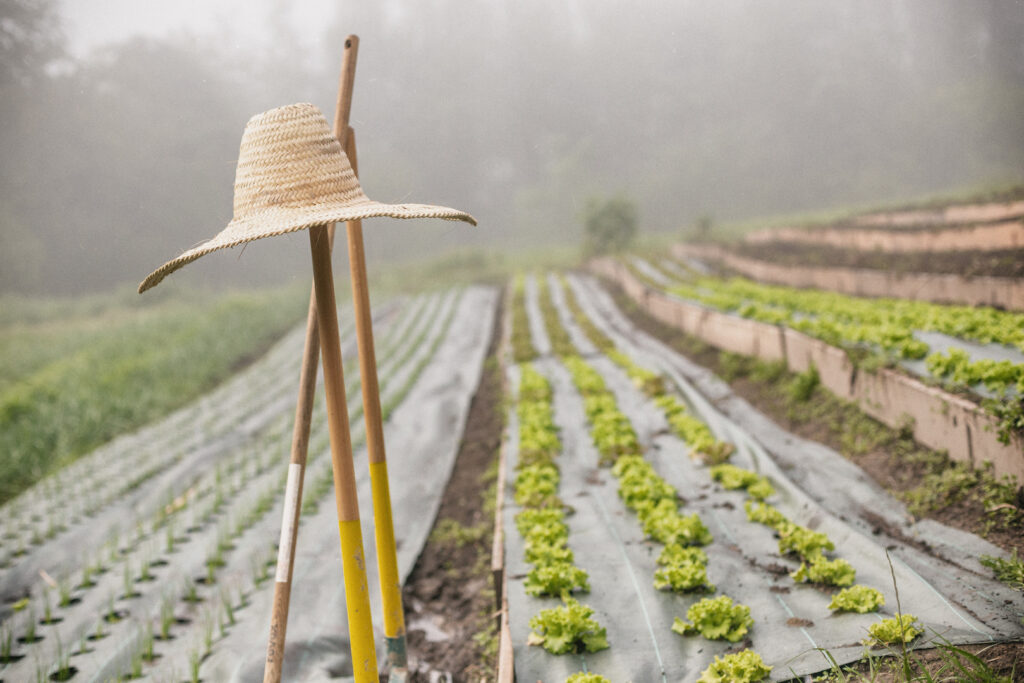
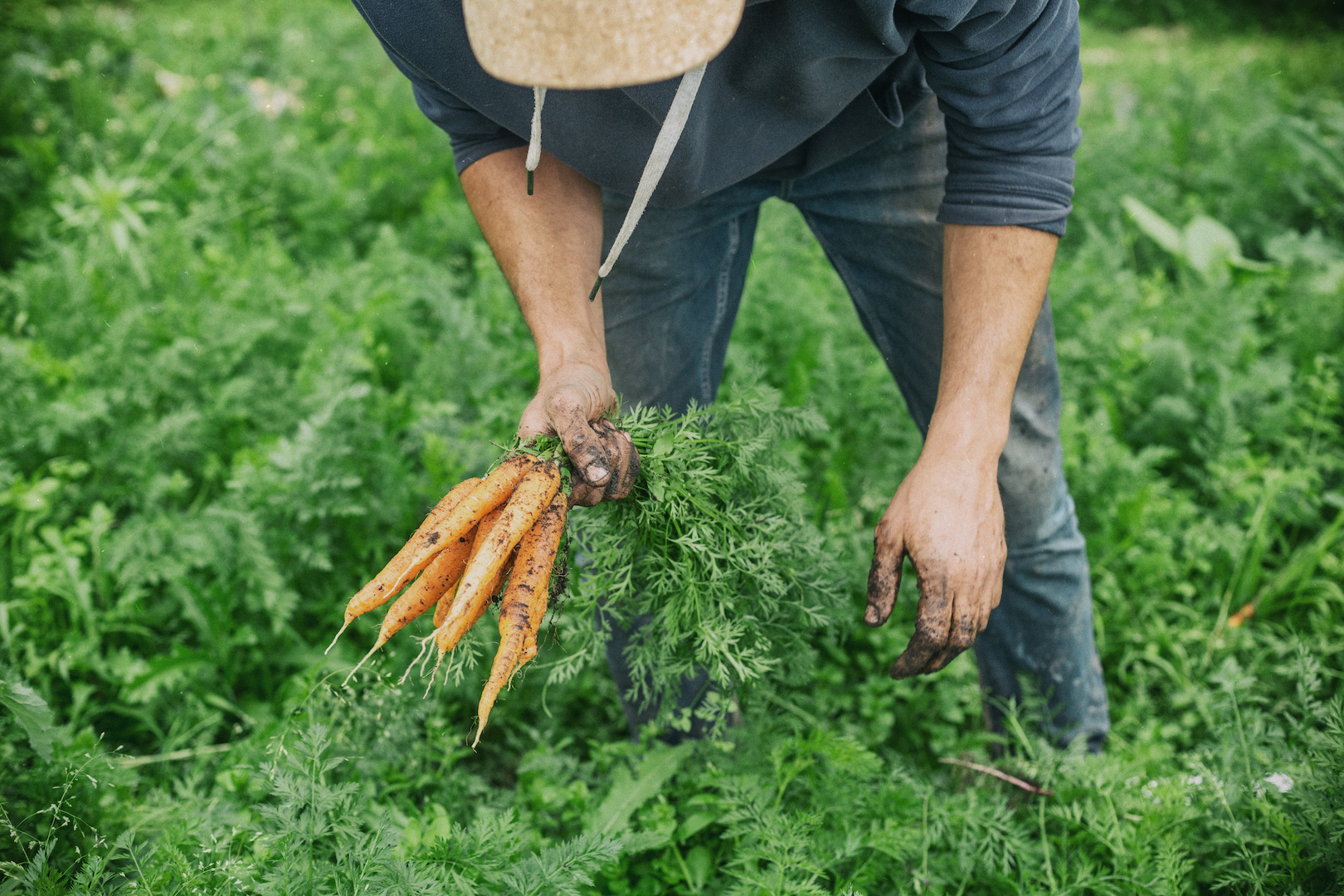
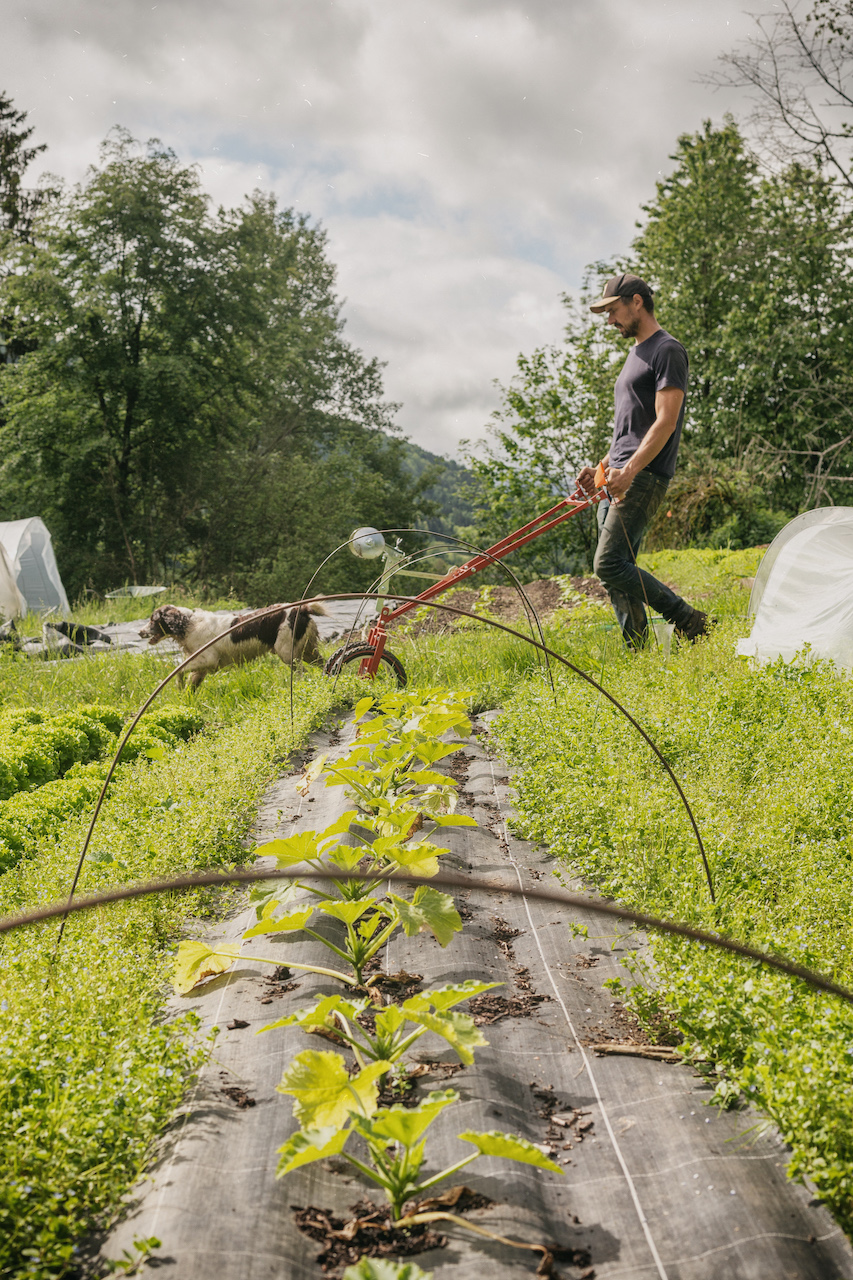
Nous voulons bien sûr produire une grande diversité de légumes en quantité, mais pas à n’importe quel prix, ni au détriment du reste du vivant, ni des humains que nous sommes. C’est pourquoi nous nous attachons à un ensemble de pratiques et de valeurs auxquels nous ne dérogeons pas. Lorsque vous achetez nos légumes, vous soutenez également notre manière de les produire.
No Artificial Pesticides
Almost 300 synthetic pesticides can be routinely used on non-organic farms. Organic farmers are permitted just 15 pesticides, all derived from natural ingredients such as garlic and clove oil, and only used in very restricted circumstances. Around 90% of Soil Association-certified organic farmers use no pesticides at all.
Instead, we use naturally occurring ecological phenomena to our advantage; for example, encouraging predatory bugs that will eat the aphids off our crops. Sometimes it’s as simple as planting veg a little further apart so pests or disease can’t spread!
Protecting our planet
Agriculture takes a toll on our planet. Thanks to nitrogen-based artificial fertilisers, farms are responsible for around 50% of all nitrous oxide emissions – and the world’s fertile soil (a finite natural resource) is being severely degraded at a rate of 24 billion tonnes a year.
Instead of artificial fertilisers, organic farms use crop rotation and companion planting. Each field is cycled through various crops over time. The sequences and combinations of plants are designed to keep the soil naturally fertile, well structured, and free of disease.
The soil on organic farms has been found to contain at least 20% more organic matter. If organic farming was common practice in the UK, we could offset at least 23% of agriculture’s current greenhouse gas emissions.